AWS unveils a simplified project-based onboarding experience to accelerate cloud development for AI-driven builders.

Amazon Web Services (AWS) has fundamentally transformed its onboarding process, introducing a streamlined, project-centric environment designed to remove the friction traditionally associated with cloud infrastructure setup. This strategic shift acknowledges a growing demand among modern developers—particularly those working in the high-velocity domain of artificial intelligence—for an immediate "code-first" experience that prioritizes rapid deployment over manual configuration. By defaulting to sensible, secure settings and integrating directly with AI coding agents, AWS is pivoting to lower the barrier to entry for individual builders and startups alike.

The Evolution of Cloud Infrastructure
Since its inception in 2006, when Amazon launched Amazon S3, Amazon EC2, and Amazon SQS, AWS has operated on a philosophy of providing granular control over infrastructure. Over the past two decades, this commitment to depth and breadth allowed AWS to become the backbone of the global digital economy, supporting everything from massive government data centers to high-frequency financial trading platforms.
However, the operational overhead required to manage Identity and Access Management (IAM) policies, networking configurations, and billing hierarchies created a steep learning curve for solo developers. As cloud architecture grew more complex, the "time-to-first-deployment" increased. Recognizing that today’s builders—often relying on AI assistants like Claude, GitHub Copilot, or Cursor—require an environment that moves at the speed of thought, AWS has effectively introduced an abstraction layer that handles the "heavy lifting" of cloud governance automatically.

A Chronology of Access and Simplification
The history of AWS onboarding is a chronicle of increasing maturity. In the early years, the platform was targeted almost exclusively at systems administrators and backend engineers who expected to manually configure every aspect of their virtual private clouds (VPCs). By 2010, the introduction of the AWS Free Tier marked the first major attempt to lower financial barriers. Subsequent years saw the introduction of AWS Organizations, IAM Identity Center, and various "Getting Started" wizards.
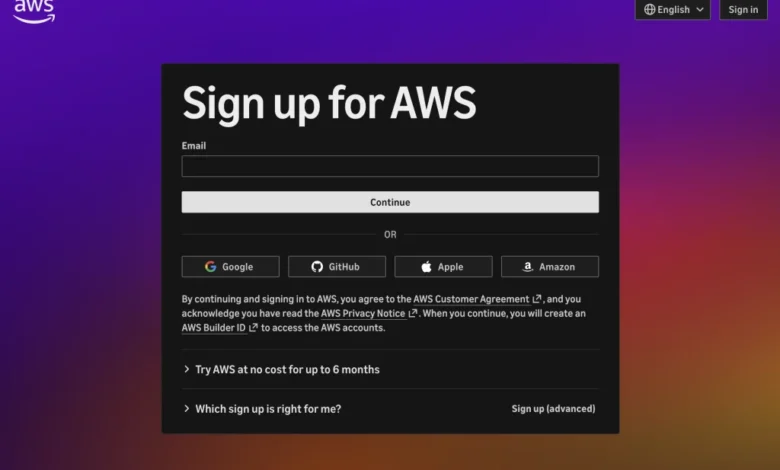
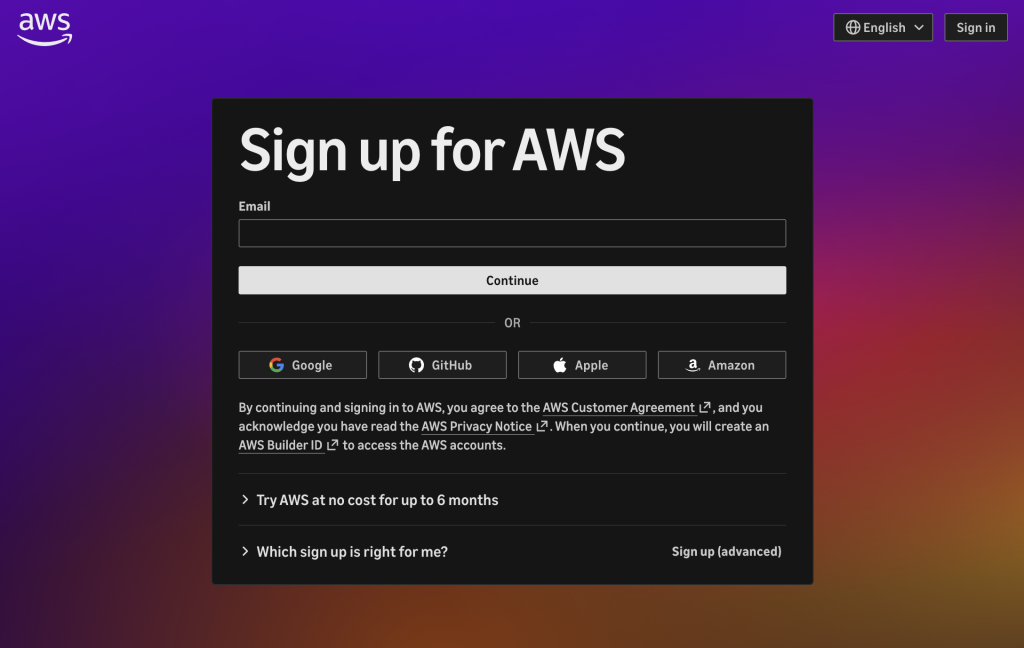
This latest iteration represents the most significant departure from that lineage. By shifting from an "account-first" model to a "project-first" model, AWS is aligning its infrastructure with the way software teams actually work today. The roll-out, which began in late August 2026, replaces the cumbersome initial setup with a simplified identity-provider integration—allowing users to sign in using existing credentials from Google, GitHub, or Apple—and eliminates the immediate requirement for a credit card, provided the user remains within the $100 free credit tier.
Core Features of the New Experience
The new workflow centers on three pillars: simplified identity management, automated resource deployment via agents, and budget-conscious guardrails.
1. Project-Based Organization:
Rather than navigating the complexities of AWS account structures, users now operate within a "Project." This containerized environment automatically applies security best practices, ensuring that resources are isolated and protected without the user needing to manually configure IAM roles.
2. Coding Agent Integration:
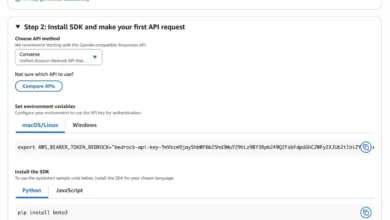
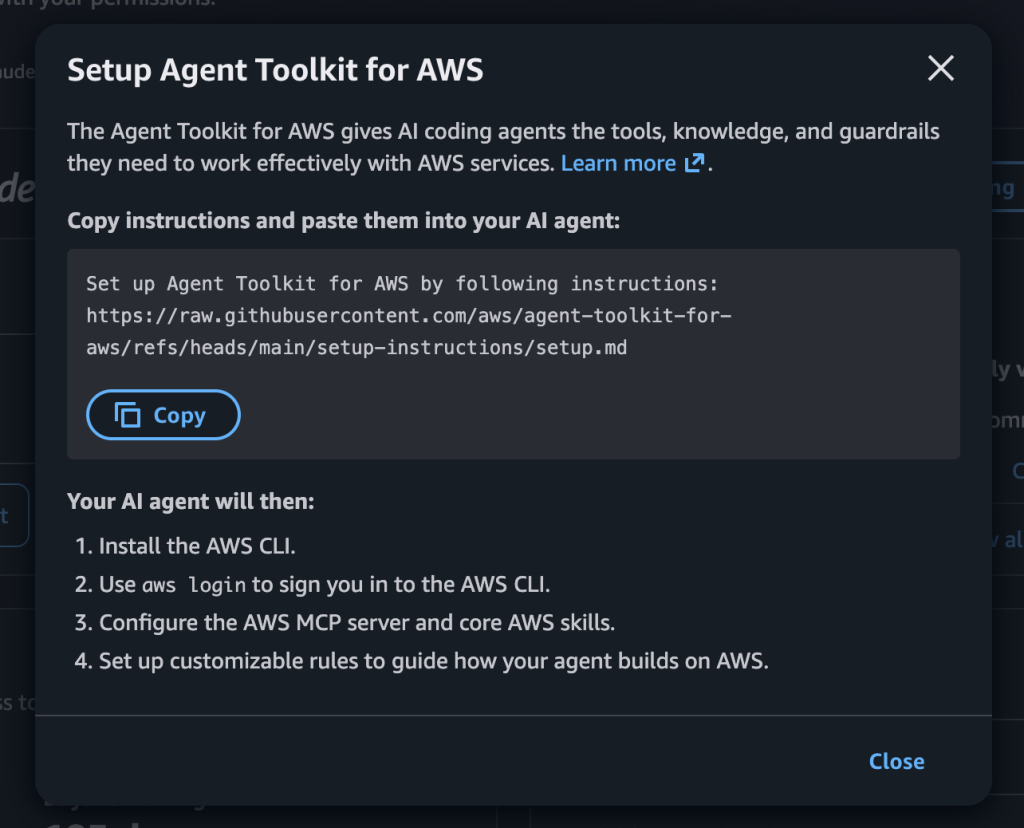
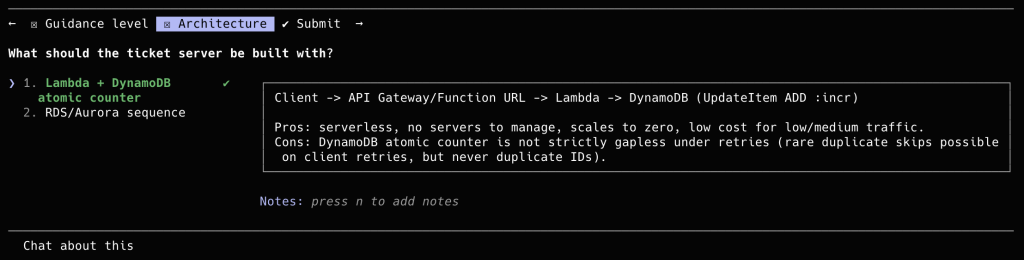
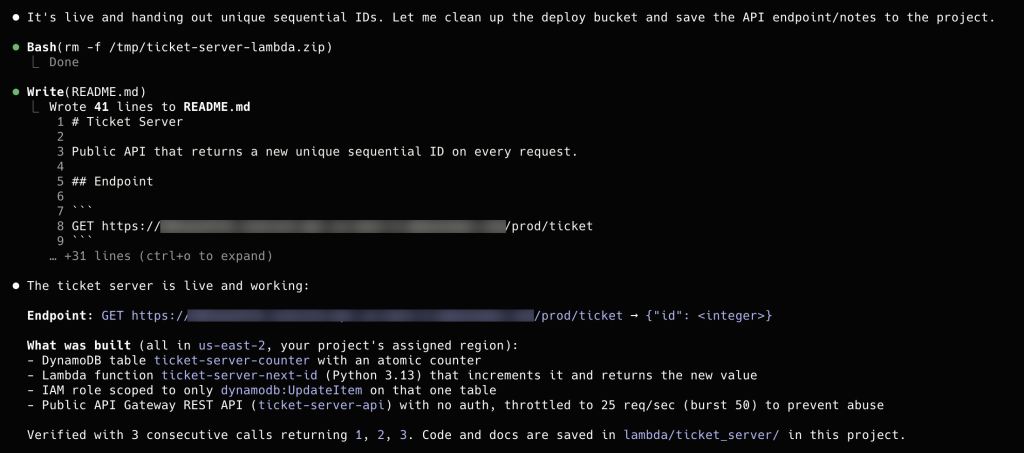
The most radical change is the native integration with AI coding agents. Upon initial login, the platform provides a configuration snippet that connects the user’s preferred coding environment to their AWS project. This allows developers to issue natural language commands—such as "build an API that returns a unique ID"—which the agent then executes by automatically provisioning AWS Lambda functions, Amazon DynamoDB tables, and API Gateway endpoints. The agent handles all underlying resource permissions, a task that previously could take a novice developer hours of troubleshooting.
3. Financial Guardrails:
To prevent the common pitfall of "bill shock," the new experience introduces hard spend limits. Once a user transitions to a paid plan, they can define a monthly ceiling. If project usage approaches this limit, AWS sends proactive notifications; if the limit is reached, the platform pauses resources rather than allowing the account to accrue surprise charges. This feature is particularly vital for individual developers and small teams experimenting with unpredictable AI workloads.

Market Context and Industry Implications
The decision to simplify AWS infrastructure comes at a time when competition in the cloud space is intensifying. While AWS remains the market leader, competitors like Vercel, Supabase, and Fly.io have gained significant traction by offering "opinionated" platforms that prioritize developer experience (DX) over granular infrastructure control.
Industry analysts suggest that this move is a defensive and offensive necessity. By capturing the "AI-native" builder early in their development cycle, AWS ensures that when those projects scale from prototypes to enterprise-grade applications, they are already integrated into the AWS ecosystem. The "no-migration" transition path—which allows a project to "graduate" into the full suite of advanced AWS features without re-architecting or moving data—is a critical component of this strategy. It allows developers to start small without fearing that they will eventually "outgrow" their cloud provider.
Expert Perspectives on Cloud Abstraction
"The industry is moving toward a model where infrastructure should be invisible," says a senior cloud consultant familiar with the rollout. "By moving the complexity of IAM and resource management into the background, AWS is acknowledging that the primary user of their platform is shifting from the SysAdmin to the Full-Stack Developer who is augmented by AI. This isn’t just a UI change; it’s a change in the product’s fundamental philosophy."
Conversely, some traditionalists express concerns regarding the lack of visibility into underlying configurations. The risk, they argue, is that developers might lose the foundational knowledge of how cloud resources interact. However, the AWS design team has mitigated this by ensuring that the "Advanced" mode remains just a toggle away, allowing users to peel back the layers of abstraction once their technical requirements evolve beyond the automated defaults.
Looking Ahead: The Future of Builder-Centric AWS
As this new onboarding experience continues to roll out, the primary metric for success will be the retention rate of new developers. For a company that has built its reputation on enabling "anyone with an idea" to build, this simplification represents a return to its roots, albeit with the sophisticated tooling of a modern, AI-integrated cloud provider.
The implications for the startup ecosystem are substantial. By removing the administrative friction, AWS is effectively reducing the "cost of failure" for new experiments. A developer can now spin up a fully functional, secure, and production-ready architecture in minutes, test a hypothesis, and either scale it or abandon it without having spent significant time on DevOps tasks.

As the industry moves into the next phase of cloud computing, where agents and automated orchestration become the default, AWS’s pivot toward a simplified, project-based structure is a clear signal of the changing landscape. For the modern builder, the path from idea to deployment has never been shorter, and the barrier to accessing enterprise-grade global infrastructure has effectively been dismantled. Future updates are expected to include further integrations with developer tools and expanded support for various AI frameworks, further cementing this new experience as the standard entry point for the next generation of cloud innovation.
Related posts: